The term “liturgical altar ministry” refers to all those who serve during Mass and other religious services. Ministrare means “to serve, to assist.” Active participation in liturgical altar service is a demanding task, which is why it is divided among different people. Liturgical ministry includes altar servers, lectors, choir members, the organist, the sexton, and the master of ceremonies. Those who fulfill these specific duties should serve as role models for others. They are bound by clearly defined rules that not everyone is able to follow. Who can participate in liturgical altar service? What are the guidelines regarding attire for altar servers and lectors? In this article, you’ll find answers to these questions.
Who participates in liturgical altar service?
Liturgical ministry is a term referring to all those who assist in the liturgy. Serving during Mass and other religious ceremonies requires appropriate attire. Liturgical ministers cannot wear everyday clothes. Liturgical vestments are required. The specific attire varies depending on the role being performed. Details regarding this matter may also be determined individually by the parish.
When we think of liturgical ministry, altar servers are the first to come to mind. They assist during Mass, but also during other ceremonies. They watch over the offerings, prepare the altar, hold the paten, ring the bells and the gong, and assist the priest. It is extremely important that altar servers actively engage in the liturgy through their service. They are the ones who carry the liturgical symbols—the most important elements of the Mass. Importantly, through their service, they encourage others to actively participate in the service. Lectors, who are more experienced, and masters of ceremonies—who serve as supervisors of the liturgical service—also play an important role in liturgical service.
Liturgical Attire
Appropriate liturgical vestments for altar servers emphasize the nature of the Mass and other liturgical events, and also symbolize the purity of the soul.
Traditional altar server attire includes the following garments:
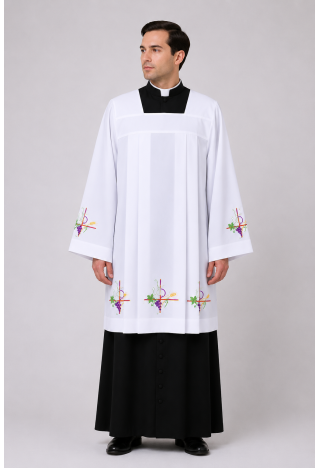
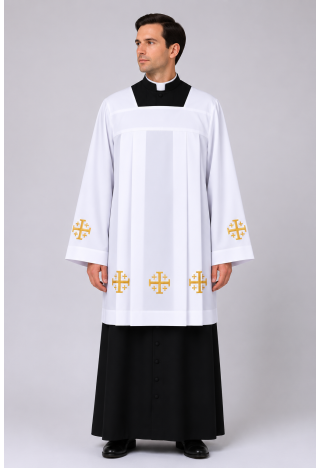
The surplice is the altar server’s basic garment. This short, white alb with wide sleeves—symbolizing the purity of the soul—is typically available in two styles. The Roman style features a neckline opening, while the Silesian style is tied at the neck. The surplice should be made of a suitable, breathable fabric that ensures comfort. MK Maryla offers custom-made altar server surplices crafted from the highest-quality fabrics. They provide comfort and fit perfectly.
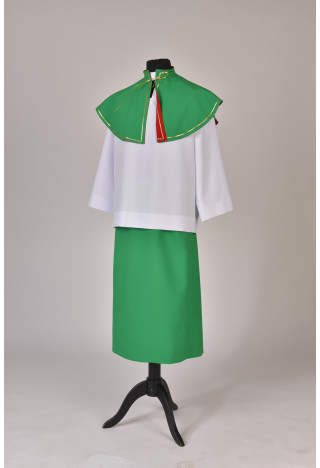
The collar is worn over the surplice and covers the shoulders. At MK Maryla, you can order this garment in a specific color. Among the options available are, for example, a red altar server cape and a red hooded cape.
· cassock
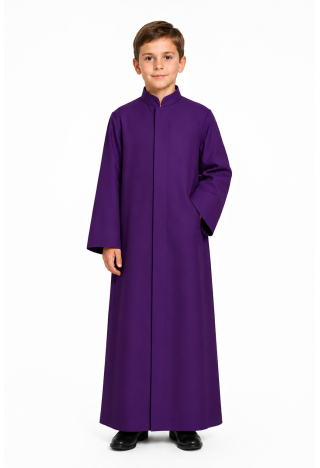
The cassock is a type of skirt that completes the outfit. Its color depends on the liturgical season. MK Maryla offers altar server skirts in green, purple, and red. Another interesting option is the altar server sets, which include a collar and a reverend. Together, they form a “sutanela,” a robe modeled after a priest’s cassock.
A long white robe tied with a belt or liturgical cord. The alb is usually worn by the lector and the master of ceremonies.
Roles in Liturgical Service
Specific duties within liturgical service depend on many factors, including age. The type of altar server attire worn depends on the rank of the altar server in question. Initially, one is a candidate—the duration of this period is determined by the parish priest. During this time, it is important to familiarize oneself with the nature of one’s future duties. As an altar server candidate, one does not wear liturgical vestments, although there are exceptions to this rule in some churches.
After the probationary period, one becomes an altar server—provided, of course, that the candidate still feels called to serve. The primary garment at this stage of service is the surplice. During Mass, it may be worn without a cassock or collar, though this also depends on the nature of the particular celebration.
The next rank within liturgical service is that of lector. The lector oversees the altar servers, as he is the eldest among them. The lector is a minister of the Word of God. His duties during the service include reading the Holy Scriptures, the liturgical commentaries, or prayers. The traditional vestment for a lector is usually an alb. MK Maryla offers albs for ministers of the Word of God in white and red. A lector’s cincture is tied around the waist. This may be a cingulum, or a thick cord. A lector’s scapular is worn over the alb around the neck.
The highest rank in the liturgical service hierarchy is that of the master of ceremonies. This person usually serves as the supervisor of the liturgical service. The master of ceremonies must possess extensive knowledge of liturgical regulations. He prepares the liturgy and ensures it proceeds smoothly. The master of ceremonies’ attire is strictly defined. The person fulfilling this role wears an alb fastened with a cord or belt. The garment worn under the alb is usually festive. Our online store offers a full range of church vestments—lectors and ministers will find the appropriate attire here.
Summary
Fulfilling a specific role in liturgical service is a responsible task. Those who decide to serve should set a good example. It is the altar servers who oversee the preparations and ensure that the liturgy proceeds properly. At the same time, they ensure that Mass and other church events retain their solemn character.