A cingulum is an ornament worn by Roman soldiers on their armor. The word comes from Latin and means “belt.”
Initially, the cingulum was a simple belt with a metal buckle that held the shield against the soldier’s back. During the Roman Republic, around the 3rd century B.C., the cingulum began to evolve. This was partly due to the need to distinguish between different military units, as well as the growing importance of the military in Roman culture.
During the Roman Empire, the cingulum took on an increasingly decorative character. It was adorned with gold, silver, colored stones, bone, and other materials. It often featured ornaments in the shape of a lion’s head or that of another animal, symbolizing strength and valor. The cingulum became an important element of the Roman centurion’s uniform; the centurion was the commander of a centuria—the basic unit of a Roman legion.
Because the cingulum was a symbol of authority and prestige, its appearance was strictly regulated. The emperor had the right to approve the designs and styles of the cingulum, and wearing one without permission was severely punished.
With the fall of the Roman Empire and the decline of the military as a key element of culture, the cingulum began to lose its significance. However, in some forms, it has survived to this day as an element of historical military uniforms or ceremonial attire.
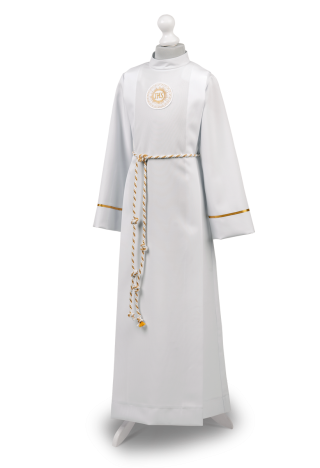
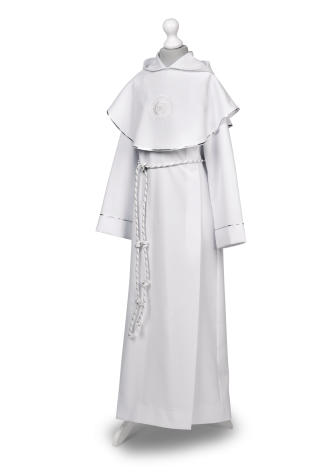
In a liturgical context, the cingulum is a short, decorative cord or belt worn by priests and bishops around the waist to hold the alb in place.
In the Roman Catholic Church, the cingulum symbolizes the spiritual bonds that connect the priest, minister, or altar server to the Church and the faithful. Just as in Roman times, the cingulum in the Roman Catholic Church is an element of vestment rich in symbolism and solemnity, and its wearing is governed by strictly defined liturgical rules.