

The celebration of Holy Mass requires a special setting—the priest is strictly required to wear appropriate liturgical vestments. This custom is deeply rooted in tradition, as are the guidelines specifying the colors of liturgical vestments. For those attending Mass, the rules regarding color and the significance of each vestment are not entirely clear. Even distinguishing between the different vestments can be quite challenging. In the following article, we will explain exactly that.
· What do the colors of liturgical vestments symbolize?
· Priests’ attire—types of vestments
· What are the characteristics of the outer liturgical vestment, and what does it look like?
Rules for Wearing Liturgical Vestments
No priest may celebrate Mass in secular clothing. Church regulations clearly define the rules regarding the type and colors of vestments. The Code of Canon Law stipulates that a priest’s attire must be neat, clean, and ironed. Furthermore, it must first be consecrated by a bishop or another clergyman holding an appropriate position in the Church hierarchy. The type and color of liturgical vestments a priest wears are not a matter of personal taste but are dictated by regulations. These rules mean that every rectory is equipped with a truly large number of liturgical vestments.
Every person who serves during Mass is required to wear the appropriate attire. Of course, this depends on the role they perform. The hierarchy of those performing duties during Mass is as follows:
· Altar server
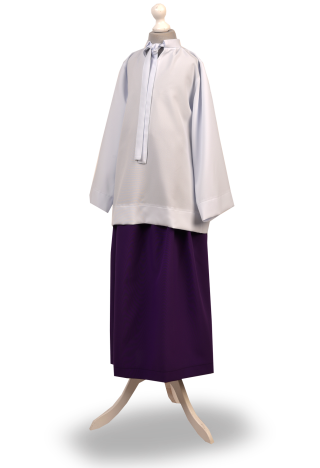
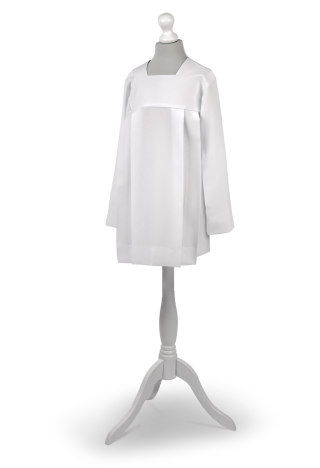
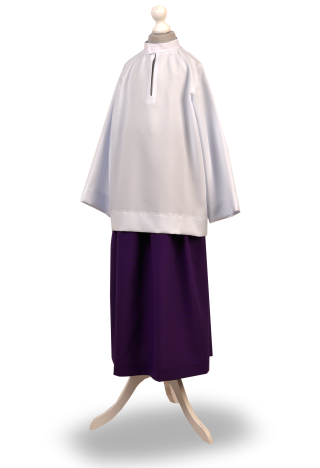
This is a boy serving at Mass. He usually wears a surplice—a white, long-sleeved garment that reaches to the waist. Depending on the parish, altar servers may also wear capes, though this is not practiced everywhere. Surplices are also popular First Communion outfits, but keep in mind that they differ from those worn by altar servers.
· Lector
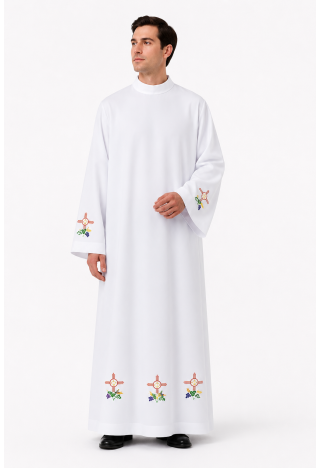
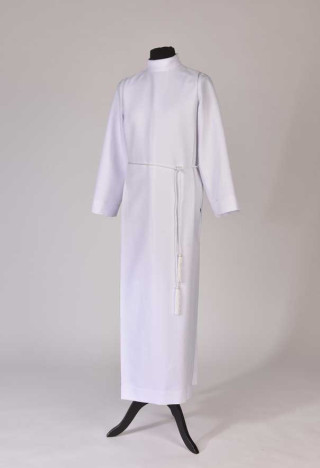
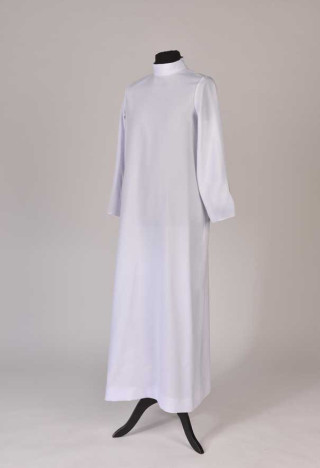
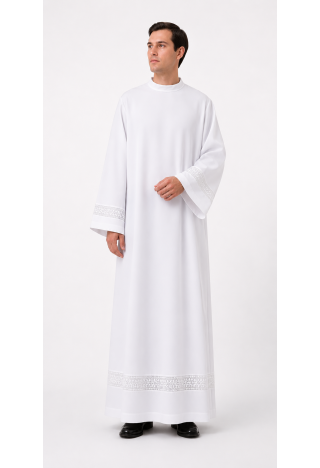
The lector usually wears an alb. This traditional white liturgical garment reaches down to the ankles and symbolizes the purity of the soul. It is tied at the waist with a liturgical cord. It is worth noting that the alb is the oldest liturgical garment.
· Deacon
Those serving as deacons have completed the first of the three degrees of priestly ordination. Although they do not have the right to celebrate Mass, they may distribute Holy Communion. During Mass, they wear a stola, draped from the left shoulder to the right hip. They may not wear chasubles; instead, they wear a dalmatic, which is similar but distinguished by its sleeves.
· Priest
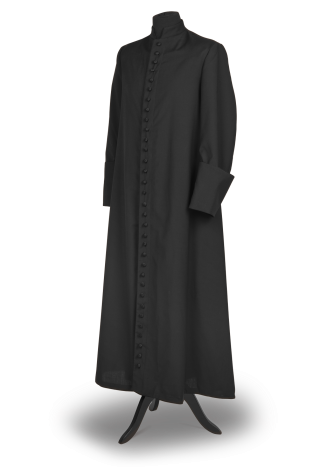
A priest’s outer garment is the chasuble, the color of which depends on the liturgical season. In addition, a priest has a whole range of other vestments, including the alb, the cop, the stole, the cassock, the habit, the clerical collar, the humeral veil, and the cope. A priest’s vestments are also significantly more ornate, though of course they maintain modesty and restraint.
· Bishop
A bishop’s vestments differ from those worn by a priest. In addition to the standard vestments of a priest, their attire includes the following elements: a piuska, a miter, a decorative sash, a ring, a pectoral cross worn around the neck, and a crosier (carried in the hands).
Types of Liturgical Vestments
In the Catholic Church, there are a large number of liturgical vestments. We are familiar with most of them, but generally have no idea what they are called. Below is a list:
· Alba
The basic liturgical vestment. It reaches to the ankles, has long sleeves, and is tied at the waist with a cingulum. This traditional vestment symbolizes the purity of the soul in a state of sanctifying grace.
· Surplice
A surplice is a shorter version of the alb, but it cannot be worn while celebrating Mass.
· Chasuble
The chasuble is an ornate liturgical vestment worn by the priest celebrating Mass. Its color depends on the liturgical season.
· Stola
A stola is a long sash worn around the neck by bishops and priests, while deacons wear it diagonally across the chest.
· Liturgical cope (pluvial)
A cope is a cape fastened at the neck, worn over the vestments when administering the sacraments. This outer garment is also worn during processions.
· Sutana
An ankle-length robe, usually black, though other colors are also permitted—they depend on one’s position in the church hierarchy.
· Collar
A white, stiff collar worn by clergy.
· Humeral
A cloth worn under the cassock, symbolizing the priest’s pure thoughts.
· Piuska
A small head covering. Its color depends on the holder’s rank in the hierarchy. Bishops wear purple skullcaps, archbishops wear pink ones, and cardinals wear red ones. As we all know, the Pope wears a white skullcap.
· Mitre
A head covering with two straps hanging down the back of the neck.
Colors of Liturgical Vestments
As you can see, different types of liturgical vestments are worn depending on the circumstances and the office held. The colors, in turn, are dictated by the liturgical season and are of great significance. Below is a breakdown:
• Green
The most commonly worn chasuble is green, which symbolizes hope. It is worn daily and during Masses when no church feast day is observed.
• White
A white chasuble symbolizes purity and is worn on feasts and memorials of Christ the Lord—with the exception of those related to his Passion—and during the administration of the sacraments.
• Purple
A purple chasuble is worn during the liturgy in the seasons of Lent and Advent, and at Masses for the dead.
• Pink liturgical vestment
A pink chasuble is worn on the Third Sunday of Advent, known as Gaudete Sunday (Sunday of Joy), as well as on the Fourth Sunday of Lent (Laetare Sunday).
• Red
The priest wears a red chasuble on Good Friday, Palm Sunday, the Feast of the Exaltation of the Holy Cross, Pentecost Sunday, and during the conferral of Confirmation and the Pope’s funeral Masses.
• Black
A black chasuble is worn on November 2 and during funeral Masses.
• Gold
Gold liturgical vestments take precedence over all other chasubles except for purple and black ones.

