The Holy Mass requires a special setting. Priests’ vestments emphasize its character and are an integral part of the celebration. Regulations require priests to wear appropriate vestments and specify when to wear vestments of particular colors. Furthermore, parishes must maintain an adequate supply of vestments.
• What are the different types of liturgical vestments, and when are they worn?
• Where did the tradition of wearing liturgical vestments come from?
• What determines the colors of liturgical vestments?
In this article, you’ll find all the most important information about liturgical vestments.
Liturgical Vestments in the Catholic Church
Liturgical vestments are simply a type of clothing worn by clergy during the celebration of the liturgy. A priest’s vestments indicate his role within the Church hierarchy. The specific colors of the vestments depend on the liturgical calendar and feast days.
The tradition of wearing liturgical vestments and guidelines for a priest’s attire
The tradition surrounding a priest’s vestments is deeply rooted in history. As early as around 1200, a canon of liturgical colors was established. This document was created by Pope Innocent III, and 300 years later, Pope Pius V put it into effect.
The Code of Canon Law recommends celebrating the liturgy even when no faithful are present. The Code—specifically Canon 929—states that priests and deacons are required to wear liturgical vestments that are presentable, meaning they must not be damaged, torn, or wrinkled. The vestments must be ironed, clean, and neat, and, importantly, they should be consecrated by a bishop or a person holding the appropriate authority within the Church hierarchy.
Types of Liturgical Vestments
The wide variety of vestments means that larger parishes have quite a number of them—after all, each clergy member fulfills a specific role. Today, we can distinguish the following types of liturgical vestments
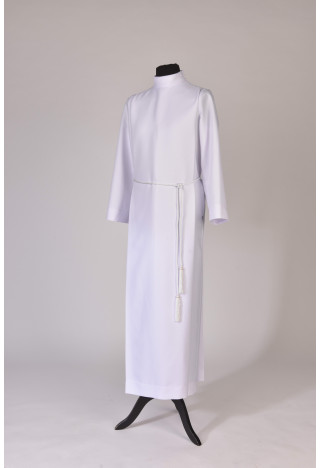
• Alb
An ankle-length white garment with long sleeves. It draws on tradition. The priest’s white vestment itself symbolizes the purity of the soul. Today, albs are also associated with First Holy Communion. This garment should be fastened with a liturgical cord, or cingulum, symbolizing consecration to God and self-restraint. The alb is also sometimes worn as an undergarment beneath the chasuble.
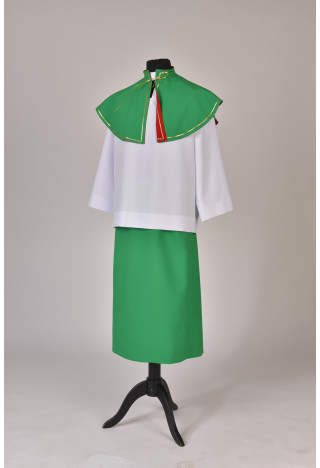
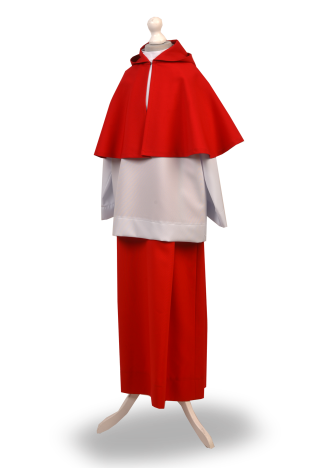
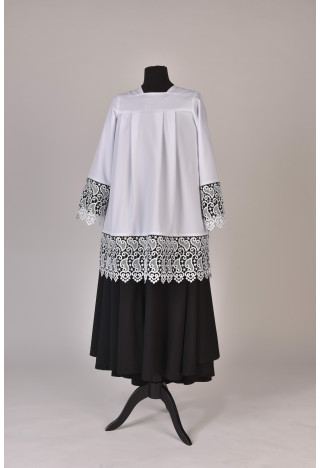
• Surplice
A surplice is essentially a shortened alb. It is not permissible to wear a surplice if a chasuble is required. Mass may not be celebrated while wearing a surplice. Today, surplices are also worn as First Communion attire.
• Chasuble
The chasuble is a vestment whose color depends on the liturgical season. The priest wears it while celebrating Mass. This traditional priestly garment has undergone numerous modifications over the years. It was once an ancient cloak, a Roman garment, with a cross embroidered on the back. Today, chasubles are modest and do not feature as many embellishments. They lend a sense of solemnity and are worn over all liturgical vestments.
• Priestly stola (orarium)
The stola is a long sash or ribbon. Priests and bishops wear it around their necks, while deacons drape it diagonally from their left shoulder to their right hip. The stola symbolizes priestly dignity. It is always worn during confession.
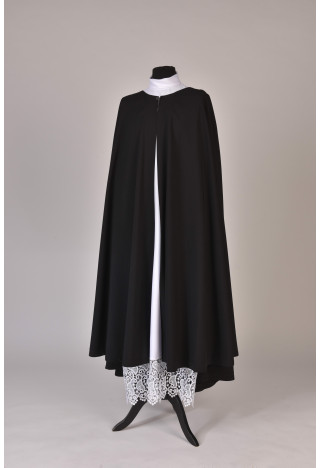
• Liturgical cope (pluvial)
Liturgical capes are worn when a priest administers the sacraments (e.g., marriage, baptism). It resembles a cape fastened at the neck and is worn, for example, over the alb.
What determines a priest’s attire—that is, what kind of vestments does he wear?
In every parish, the sacristy contains the priest’s vestments—the sheer number of them may seem surprising at first. After all, there are different colors depending on the liturgical calendar, different outfits worn for different roles, and other factors to consider.
Before Mass, liturgical vestments should be prepared for the priest and his assistants. The type of vestments depends on the rank held in the ministry, but also on the orders received.
The vestments of an ordained priest consist of an alb, a stole, and a chasuble. Deacons—that is, those who have received the first of the three degrees of sacramental ordination in Catholicism—do not wear a chasuble but rather a dalmatic. Specifically, however, this depends on the nature of the ceremony. In the case of a less solemn liturgy, an alb and a stole are permitted—but this applies only to deacons.
Colors of Liturgical Vestments
The colors of liturgical vestments are of great significance. Each color is closely linked to a specific liturgical season in the Church. They correspond to particular feasts.
• Green liturgical vestments
The green liturgical vestment—more specifically, the green chasuble—is the most commonly worn garment. The color symbolizes hope for salvation and the renewal of life. It is worn daily,
on weekdays and Sundays during the ordinary time of the liturgical calendar.
• White chasuble
As is well known, the color white symbolizes purity and joy, but also a festive mood. In the Catholic Church, a chasuble of this color is used on feasts and memorials of Christ the Lord, with the exception of those relating to his Passion. White vestments are also worn during the sacraments, such as Baptism, Marriage, and the Anointing of the Sick.
• Purple chasuble
A purple liturgical vestment signifies penance, humility, mourning, and repentance in the liturgy. Priests wear a chasuble of this color during Masses in Lent, Advent, and Masses for the dead. In Christian tradition, purple is also a symbol of anticipation of the encounter with Jesus.
• Pink liturgical vestment
A pink chasuble is worn by a priest only on two Sundays a year: the Third Sunday of Advent, known as Gaudete Sunday (Sunday of Joy), and the Fourth Sunday of Lent (Laetare Sunday). A vestment of this color symbolizes joy.
• Red liturgical vestment
In Catholic tradition, red is a symbol of fire and blood. This color refers to the Passion of Christ. The priest wears a red chasuble on Good Friday, Palm Sunday, the Feast of the Exaltation of the Holy Cross, Pentecost Sunday, and on feasts commemorating the apostles and martyrs. Red vestments are also worn during the pope’s funeral Masses and when administering the sacrament of Confirmation.
• Black liturgical vestments
Black liturgical vestments are worn during funeral Masses (today, priests often substitute purple ones) and on November 2, the Commemoration of All the Faithful Departed. In Christian tradition, black is a symbol of mourning, night, and death.
• A priest’s gold vestments
Golden liturgical vestments symbolize joy, honor, and solemnity. They often replace all chasubles except for purple and black ones.