Holy Baptism in the Catholic Church is a very important sacrament. It is the first of the sacraments, without which all the others would be impossible. Through Baptism, original sin is washed away from the child, and the child is welcomed into the Catholic Church community. There are as many as five symbols associated with Holy Baptism. Find out what they mean and how important their use is.
The Rite of Holy Baptism—What Does It Mean?
Baptism is an extremely important celebration for every child, as well as for parents who wish to raise their child in the Catholic faith. Baptism is the first of several sacraments in a person’s life. Through it, the child becomes part of the entire community. Baptism cleanses the child of original sin and opens the door for the new member of the community. It enables the child to walk the path of light, the path of Christianity. This is an extremely important event for the entire family. It requires proper preparation. And this isn’t just about preparing the home for the reception after the ceremony. The rite itself, though brief, requires concentration and the use of several essential items.
The history of Holy Baptism is quite long. To understand it, one must go back to the very beginnings of Christianity. Why? Baptism was instituted by Jesus himself, who was baptized in the Jordan River by John the Baptist. No wonder, then, that this tradition—this sacrament—has survived to the present day. Although the form is slightly different—and the ceremony takes place in a church rather than in a river—the meaning remains the same. The entire ceremony is accompanied by several symbols worth mentioning.
What is the significance of the sign of the cross on the child’s forehead?
The symbols of Holy Baptism include, first and foremost, the sign of the cross, which the priest, along with the parents and godparents, makes on the child’s forehead. The sign of the cross holds special significance; it encompasses several aspects of the faith. It is made at the very beginning of the celebration. It imprints a seal on the child, signifying the grace of redemption that the child receives through Christ. The sign of the cross has been known since the very beginning and was used many times by people even during Jesus’s time. The sign of the cross made at baptism is also a symbol and confirmation of a conscious relationship with God. The fact that it is performed in a specific sequence shows that it is also an expression of faith in the mystery of the Holy Trinity—the most essential tenet of the faith for all Christians.
Washing the Child with Baptismal Water
The most important, culminating moment of every baptism is the anointing of the child’s forehead with holy water. The priest does this while uttering these very important words: “(the child’s name), I baptize you in the name of the Father, and of the Son, and of the Holy Spirit.” This is an incredibly solemn moment in which the child receives the power of the Holy Spirit. Thus, the child becomes a unique child of God. The anointing, together with these words, constitutes the essential form and substance of Baptism. It is sufficient to perform this action and speak the prescribed words for the sacrament to be validly administered. This remains true even in situations where other parts of the rite cannot be performed. Various circumstances may influence this. After all, Baptism is not always received in good health and under favorable conditions.
The symbols of Holy Baptism are, above all, holy water. Human beings cannot live without water. Neither animals nor plants can live without water. In the case of Baptism, water is a symbol of life, growth, and development. Water also serves to purify. It is no wonder, then, that this moment is the most important in the liturgy. For baptism washes away the yoke that weighs upon every human being because of original sin. The very fact that John baptized Jesus with water from the Jordan River speaks to the importance of water in this sacrament.
Anointing with Chrism
After the most important part of the baptism—the pouring of holy water on the child’s head—is completed, another highly symbolic act follows: the anointing with chrism. The oil used in baptism is holy chrism. Just as when pouring water on the head, the priest also recites a special formula here. The words are: “Almighty God, Father of our Lord Jesus Christ, who has freed us from sin and reborn us through water and the Holy Spirit, He Himself anoints you with the chrism of salvation, so that, incorporated into the people of God, you may persevere in unity with Christ the Priest, Prophet, and King for eternal life.”
Even in ancient times, anointing was an extremely important symbol. Most often, it accompanied the installation of a king, priest, or prophet. It was a sign that God Himself had chosen that person to fulfill a specific role. Anointing assigned specific tasks to a person, which were also intended to bring about the fulfillment of God’s plan in the world.
Through the sacrament of Holy Baptism, a person is united with God and, as a child, is united with Christ. From God, they receive a share in the prophetic, priestly, and kingly mission that the Lord Jesus established and to which He committed the new member of the Church.
The Vesting of the White Robe
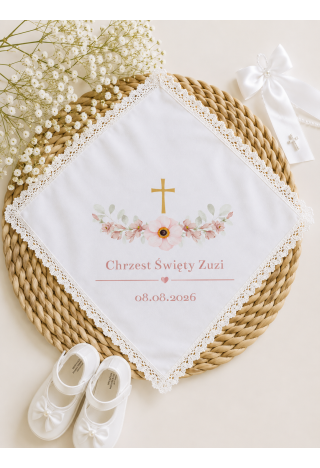
The rite of anointing with chrism concludes with the vesting of a white garment. This is another symbol of the sacrament of Baptism that we encounter during each of these ceremonies. This symbolic gesture is closely linked to the words spoken by the priest. The phrase is: “(Name of the person being baptized), you have become a new creation and have clothed yourself in Christ; therefore, you receive this white garment. May your loved ones, by word and example, help you preserve the dignity of a child of God, unblemished until eternal life.”
This symbol also dates back to ancient times. During Christ’s ministry, many adults were nonbelievers. It was only after some time that they began to decide to turn away from their former way of life and follow the path of Jesus. At that time, those who decided to be baptized were given new white garments to wear. They wore them for an entire week as they attended church, where they could listen to mystagogical catechesis preached by the bishop. The purpose of these catechesis sessions was to thoroughly explain to the newcomers—the new Christians—what spiritual benefits awaited them, but also what commitments they would have to undertake.
Although the passage of time has meant that today Holy Baptism is received mainly by children, especially infants, the symbol of the white garment and its placement on a new member of the community remains strong. The whiteness of this garment is also symbolic—this color signifies spiritual purity and the joy of a person who has the opportunity to join the Christian community. There is another side to the coin. The gesture of placing the white garment refers to the words of Saint Paul the Apostle. He wrote that the sacrament of baptism allows a person to attain a spiritual state similar to that of the Creator.
Lighting the baptismal candle
What symbols do we use during Holy Baptism? The last of these is the candle. During the administration of the sacrament, the Paschal candle burns in the church. It signifies that Jesus Himself is spiritually present among those who are praying. Usually, the godfather brings a candle and, at the appropriate moment, lights it from the flame of the Paschal candle. This is a symbolic gesture meant to remind us that Christ’s words should serve as a guide for every baptized person.